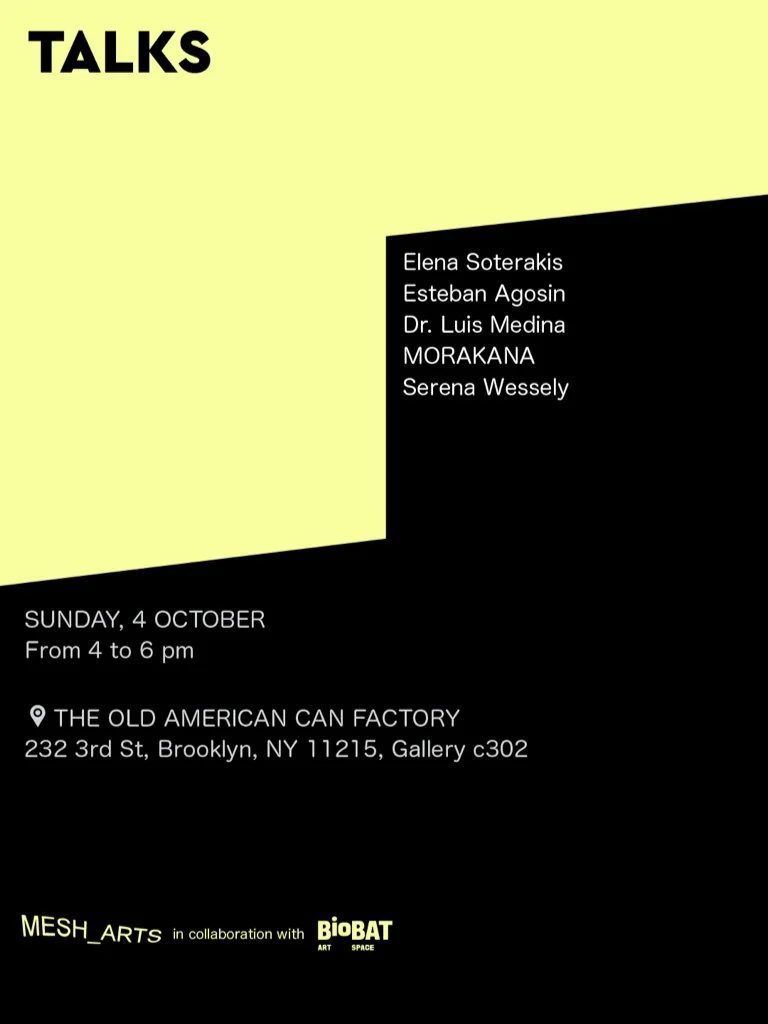
TALKS
RETOOLING: Art, Ecology, & Climate Adaptation
Sunday, October 4
4–6 PM
As part of Retooling: Art, Ecology, & Climate Adaptation, two conversations examine what emerges when artistic experimentation meets scientific research. Through speculative works engaging water, signals, and symbiosis, artists, scientists, and makers come together to test new tools, materials, and ways of understanding the systems we inhabit.
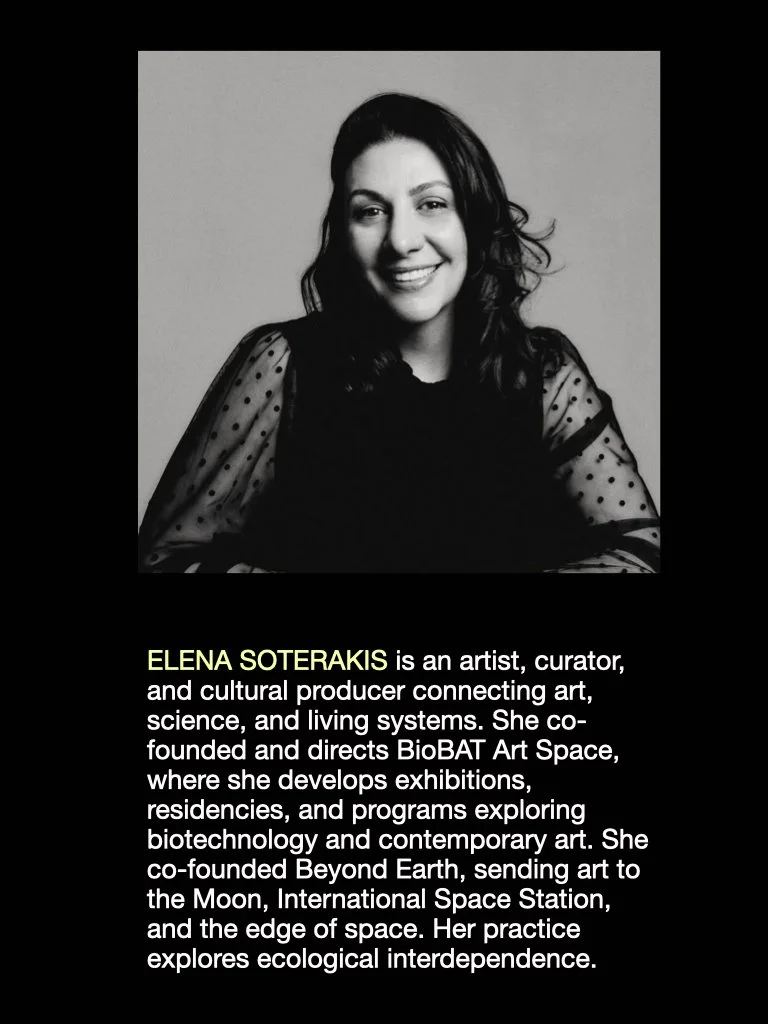
The conversations will be moderated by Elena Soterakis, artist, curator, and Director of BioBAT Art Space, a Brooklyn-based space connecting art with scientific research and experimentation.
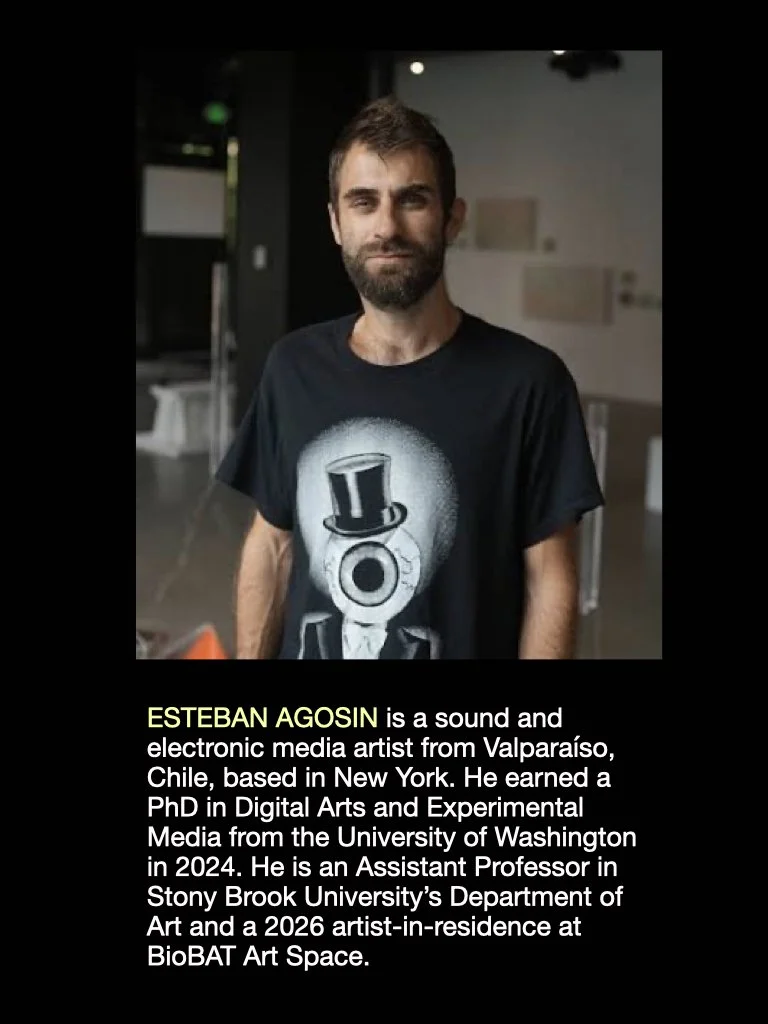
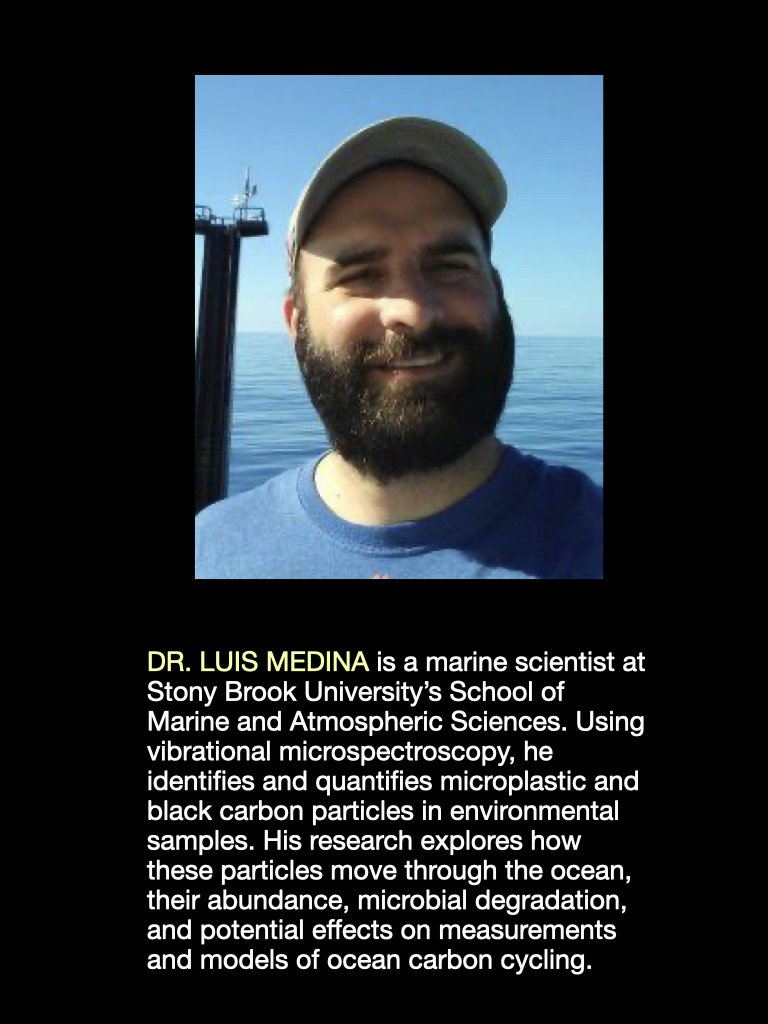
ESTEBAN AGOSIN OTERO + DR. LUIS MEDINA
Camanchaca
Artist Esteban Agosin Otero joins marine scientist Dr. Luis Medina to discuss Camanchaca (2026), a sound installation inspired by Chilean fog-harvesting nets. Captured humidity, algae-based speakers, radio transmission, and visitors’ bodies form a responsive system that makes atmospheric and biological processes tangible.
Their conversation considers how scientific knowledge and living materials become part of the artistic process, and how collaboration can turn environmental research into new forms of experience.
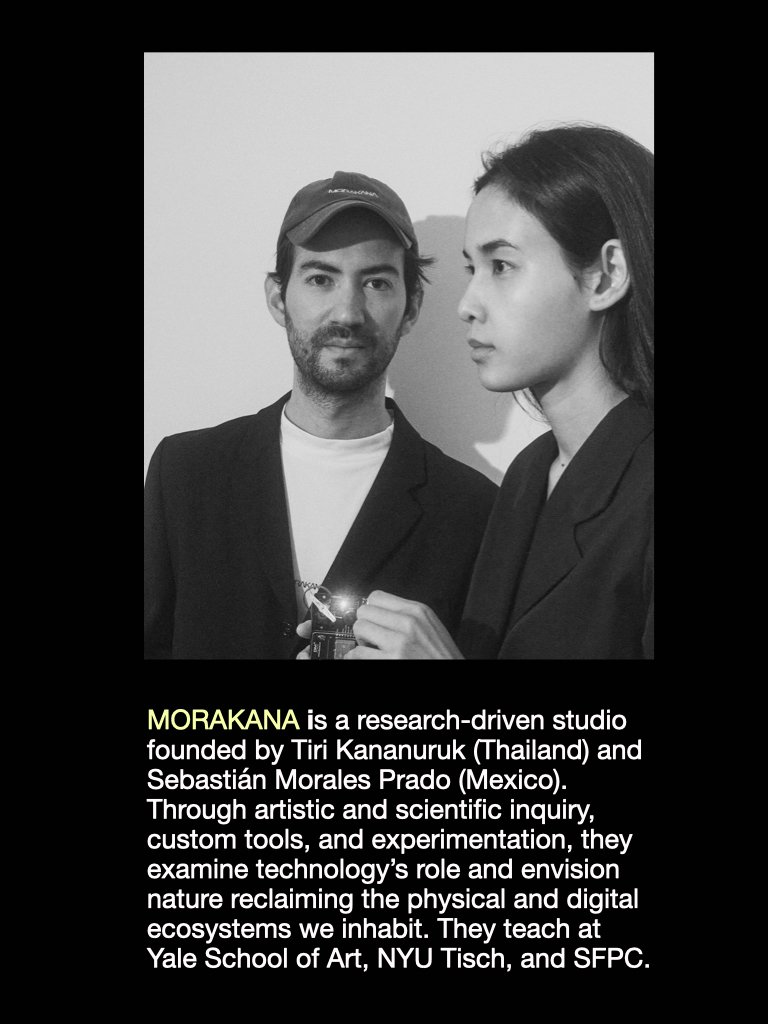
MORAKANA + SERENA WESSELY
Inoculated
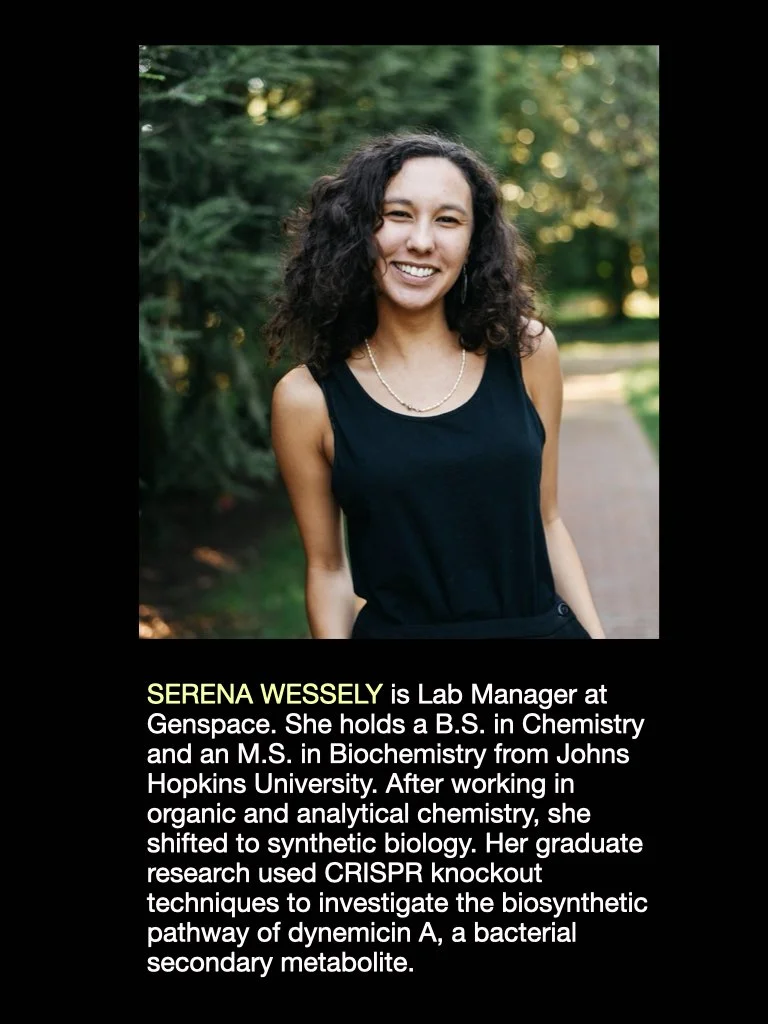
Artist MORAKANA joins Serena Wessely, Lab Manager at Genspace, to discuss Inoculated (2024), a living sculpture imagining organisms that evolve to metabolize the WiFi signals surrounding us.
Developed through NEW INC’s Creative Science program, Inoculated grew through a process of interdisciplinary research and experimentation, bringing together mycelium, network devices, custom electronics, and scientific concepts of symbiosis and evolution. The work reframes WiFi and radio waves as part of our ecology—an environmental force to which other organisms might eventually adapt.
The conversation follows this speculative idea from NEW INC into the laboratory, considering how access to scientific expertise, tools, and spaces for experimentation allows an imagined organism to take material form. With Wessely, MORAKANA will reflect on the role of collaboration in moving between artistic speculation and biological research.